Artificial Intelligence (AI) is no longer a futuristic concept—it’s transforming classrooms, online courses, and learning experiences around the world. From personalized tutoring to automated grading, AI is reshaping how students learn, how teachers teach, and how educational institutions operate.
As technology continues to evolve, AI is making education more accessible, engaging, and efficient than ever before. But while its benefits are significant, it also raises important questions about ethics, privacy, and the role of human educators.
Let’s explore how AI is changing education and what it means for the future of learning.
What Is AI in Education?
Artificial Intelligence in education refers to the use of computer systems that can perform tasks requiring human intelligence, such as understanding language, recognizing patterns, analyzing data, and making decisions.
AI-powered educational tools can:
- Answer students’ questions instantly
- Personalize lesson plans
- Track learning progress
- Generate quizzes and assignments
- Automate administrative work
- Provide real-time feedback
Rather than replacing teachers, AI acts as a powerful assistant that enhances the learning experience.
1. Personalized Learning for Every Student
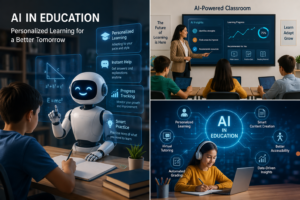
One of AI’s greatest strengths is its ability to adapt learning to each student’s needs.
Traditional classrooms often follow a one-size-fits-all approach, but every student learns differently. AI analyzes learning behavior, identifies strengths and weaknesses, and recommends lessons that match each learner’s pace.
For example, if a student struggles with algebra, an AI-powered platform can provide extra practice problems, simplified explanations, and personalized quizzes before moving to more advanced topics.
This creates a more effective and less frustrating learning experience.
2. AI Tutors Available 24/7
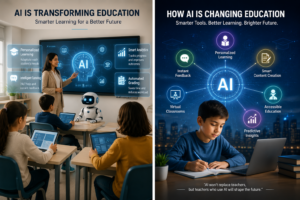
Students no longer have to wait until the next class to get help.
AI-powered tutoring systems can answer questions at any time of the day, explain difficult concepts in multiple ways, and provide step-by-step guidance for problem-solving.
These virtual tutors are especially valuable for students preparing for competitive exams or learning independently.
Instead of replacing teachers, they extend learning beyond the classroom.
3. Faster Grading and Instant Feedback
Grading assignments is one of the most time-consuming tasks for educators.
AI can automatically evaluate:
- Multiple-choice tests
- Short-answer questions
- Coding assignments
- Grammar and writing quality
- Language pronunciation
Students receive immediate feedback, allowing them to identify mistakes and improve much faster.
Teachers can then spend more time mentoring students instead of handling repetitive administrative work.
4. Smarter Content Creation
AI helps teachers create educational materials more efficiently.
With AI tools, educators can generate:
- Lesson plans
- Worksheets
- Practice questions
- Presentations
- Flashcards
- Interactive quizzes
- Classroom activities
This reduces preparation time while allowing teachers to focus on delivering engaging lessons.
5. Breaking Language Barriers
Language should never prevent someone from learning.
AI-powered translation and speech recognition tools make educational content accessible to students from different linguistic backgrounds.
Features like:
- Real-time translation
- Automatic subtitles
- Voice-to-text conversion
- Text-to-speech reading
help learners understand lessons more effectively, regardless of their native language.
This makes education more inclusive and globally connected.
6. Better Accessibility for Students with Disabilities
AI is making education more inclusive than ever.
Students with visual, hearing, or learning disabilities can benefit from AI-powered technologies such as:
- Screen readers
- Voice assistants
- Speech recognition
- Real-time captions
- Smart note-taking
- Personalized reading support
These tools enable more students to participate confidently in learning.
7. Learning Through Virtual Experiences
AI combined with Virtual Reality (VR) and Augmented Reality (AR) creates immersive educational experiences.
Imagine:
- Walking through Ancient Rome during a history lesson
- Exploring the solar system in 3D
- Performing virtual chemistry experiments
- Visiting the human heart from the inside
Interactive learning improves engagement and helps students remember concepts more effectively than traditional lectures.
8. Smarter Career Guidance
AI can analyze a student’s interests, academic performance, and skills to recommend suitable career paths.
Students receive suggestions about:
- College programs
- Professional certifications
- Internship opportunities
- Skill development
- Emerging careers
This helps learners make informed decisions about their future.
Challenges of AI in Education
Despite its many advantages, AI also presents several challenges.
Privacy Concerns
Educational platforms collect large amounts of student data. Schools must ensure this information is protected and used responsibly.
Overdependence on Technology
Students should use AI as a learning aid, not as a shortcut. Critical thinking, creativity, and independent problem-solving remain essential skills.
Digital Divide
Not every student has access to high-speed internet, modern devices, or AI-powered learning platforms. Bridging this gap is crucial to ensure equal educational opportunities.
Academic Integrity
Generative AI tools make it easier to produce essays, assignments, and coding solutions. Schools must encourage responsible use and emphasize understanding over simply generating answers.
Will AI Replace Teachers?
The simple answer is no.
Great teachers do far more than deliver information. They motivate students, build confidence, encourage collaboration, understand emotions, and inspire curiosity.
AI can automate repetitive tasks and provide personalized support, but it cannot replace empathy, mentorship, or the human connection that teachers bring to education.
The future is likely to involve teachers and AI working together, combining technology with human expertise.
The Future of AI in Education
Over the next decade, AI is expected to become an even more integrated part of education.
Future developments may include:
- Fully personalized learning journeys
- AI-powered virtual classrooms
- Real-time performance analytics
- Intelligent educational games
- Advanced language learning assistants
- Predictive systems that identify students needing extra support
As these technologies mature, education could become more flexible, inclusive, and effective than ever before.
Final Thoughts
Artificial Intelligence is transforming education by making learning more personalized, accessible, and engaging. From intelligent tutoring systems to automated grading and immersive virtual experiences, AI is helping students learn in ways that were once unimaginable.
However, technology is most effective when paired with skilled educators who inspire, guide, and support learners. Rather than replacing teachers, AI empowers them to focus on what matters most: helping students grow.
As schools, universities, and online learning platforms continue to adopt AI, one thing is clear—the future of education will be shaped by a partnership between human expertise and intelligent technology.
The classroom of tomorrow is already taking shape, and AI is playing a central role in building it.
Refered from: https://s7.upskillrocket.website